Web Development for Scalable Websites
Custom Website Development Services

Custom website development services focused on speed, scalability, conversion, and seamless user experience.
↳ What you’ll get?
↳ Is this for you?
You're launching, rebuilding, or scaling a digital product, and you need a website that performs under real conditions — not just looks good in a browser. A few situations we hear most often:
- You launched a website, but it's not converting at the rate your acquisition spend should support
- Your current site slows down or breaks when you try to add new pages, integrations, or content sections
- You're expanding into a new market or audience and your existing site wasn't built to adapt — restructuring navigation, adding a language, or targeting a different buyer type means starting over
- Your team loses hours managing workarounds on a site that was never built to be operated without developer support
- You have clear positioning and business direction, but no reliable development partner to build and maintain the website
- Your existing site was built quickly to get something live — and now it limits growth rather than supports it
If two or more sound familiar, a call is probably worth your 30 minutes.

How to develop a good website?
Good custom website development services start with a clear definition of what the website must achieve commercially — not just how it should appear. Page architecture, performance requirements, and integration logic are established before development begins. Every page is structured around the actions the business needs visitors to take: signups, bookings, purchases, or enquiries. When structure, content flow, and technical decisions are aligned from the start, the result is a website that loads fast, adapts to growth, and converts reliably — without requiring constant rebuilds to stay effective.
↳ About service
Custom website development is the full build of a website — from content architecture and technical requirements through development, integration, testing, and launch. A purpose-built site, engineered around what the business needs to achieve and how real visitors actually navigate and convert.
Before a single page is built, the goal of every page is defined. What action does a visitor need to take? What information do they need to get there? What integrations, content structures, or performance requirements apply? These questions determine page hierarchy, navigation logic, and build decisions — so every structural choice connects back to a commercial outcome.
Architecture is scoped to support growth from the first release. Page structure, component logic, and integration frameworks are built to absorb additional pages, new content sections, language variants, and evolving business requirements. This is what gives a site longevity — and makes expansion a configuration decision rather than a rebuild.
Performance and delivery standards are built into every engagement. Responsive implementation across devices and screen sizes, load performance optimisation, accessibility compliance, and cross-browser consistency are delivered as part of the build. Speed and reliability directly affect whether a visitor stays on the page, completes a form, or makes a decision in the business's favour.
A website is only as useful as the team's ability to operate it. CMS configuration is scoped so that content teams and marketing leads can publish pages, update content, and run campaigns independently. Code is documented and structured for continuity — so the business retains full control over its site as teams and partners evolve.
The core squad typically includes an Engineer, a Strategic Lead, and a Project Manager. Specialists — back-end engineers, QA, integration leads — are added based on scope and complexity.
Engagements range from a focused build over a few weeks to multi-year partnerships covering ongoing development, performance work, and content expansion. Scope is defined around what the business actually needs.
↳ Signs you need this service
Each of these is a symptom. The line after is what changes when the work is done right.
- High traffic, low conversion. Visitors arrive but don't take the action the business needs them to take — and the data doesn't clearly explain why.
→ A build structured around user journeys and conversion logic, where page hierarchy, content structure, and calls to action are aligned to what visitors need at each stage. - The site breaks when you try to grow it. Adding a new section, a new language, or a third-party integration creates problems that weren't anticipated when the site was first built.
→ A scalable page architecture and integration framework that supports growth without regressions or full structural rebuilds. - Speed and performance are hurting the business. Slow load times increase bounce rates and reduce credibility before a visitor reads a single line of copy.
→ A seo friendly website development approach with clean code, optimised asset delivery, and measurable improvements in core page performance metrics. - The team can't update the site without developer support. Simple content changes, new campaign pages, or product updates require external help to ship.
→ A CMS configuration that gives the right people direct control over the right content — without technical dependencies for routine tasks. - The website no longer reflects what the business has become. The current build was appropriate for an earlier stage but now creates a credibility gap with buyers, partners, or future clients.
→ A purpose-built website that matches the maturity, positioning, and commercial ambition of the business as it stands today.
↳ Solutions for every industry
Travel website development. In hospitality, the website is a direct revenue channel. Every friction point in a booking flow, every slow-loading page, and every poorly structured content decision has a measurable cost. Custom development for hotels, hospitality groups, and experience brands is built around conversion from first visit to confirmed booking — with integrations for reservation systems, availability engines, and loyalty or CRM platforms
HR Tech custom website development. HR technology platforms have two different buying conversations happening at once — procurement stakeholders evaluating the product, and end users who will work in it every day. A website built for an HR Tech business must serve both: clear, credible product communication that supports a considered purchase decision, and fast, functional pathways for trial, demo, or onboarding activation. Development priorities include dual-audience page architecture, integration with the HR software ecosystem, and the enterprise-grade consistency that procurement teams expect before a deal progresses.
Custom ecommerce website development services. It’s about the mechanics that determine whether a visitor becomes a buyer. Conversion architecture, product discovery logic, checkout flow, performance under load, and integration with inventory, fulfilment, and marketing platforms — these are the decisions that move revenue metrics. A purpose-built eCommerce site is engineered around buyer behaviour, not the defaults of a platform template.
B2b website development services. The most important thing there is to build credibility across a multi-stakeholder buying process before a conversation ever starts. Decision cycles are long, the audience is sceptical, and trust is built through clarity — not claims. A custom B2B website structures content and navigation around the full buying journey, from initial category awareness through to the point where a visitor becomes a qualified enquiry. CRM, marketing automation, and intent tracking integrations are built in from the start — not retrofitted later.
Small businesses website development. Small businesses that invest in a properly built website gain a commercial asset that outperforms their apparent market size. A well-structured site improves organic visibility, reduces the manual effort of managing and updating content, and creates a professional presence that supports direct sales, partnership conversations, and repeat business. The build is scoped to what the business actually needs — no unnecessary complexity, no features that serve the development process more than the owner.
↳ Why work with us
Design-driven, science-led. Every decision is grounded in research and validated against user behavior — not preference, not trend, not whichever screenshot looked good on Dribbble this week.
CSAT
Customer Satisfaction Score (CSAT) in Tech, Luxury & Business Services
Projects Delivered
Complex digital products delivered on time across FinTech, Healthcare, Hospitality, and Business Services.
Rating & Review
Trusted rating based on verified client reviews on Clutch
Have a project to discuss?
Book a free 30-minute call with our CEO. We'll review your situation and tell you honestly whether we're the right fit.


↳ Workflow

Discovery Phase
We define product goals, user needs, core flows, technical constraints, business priorities, and UX opportunities to create a clear foundation for design decisions.

Design Phase
We translate product logic into wireframes, high-fidelity UI, interactive prototypes, and reusable components that support consistency and scalability.

Hand-Off
We prepare structured Figma files, design specifications, assets, component states, and interaction notes so the development team can build with fewer gaps and rework.
How we turn services into results

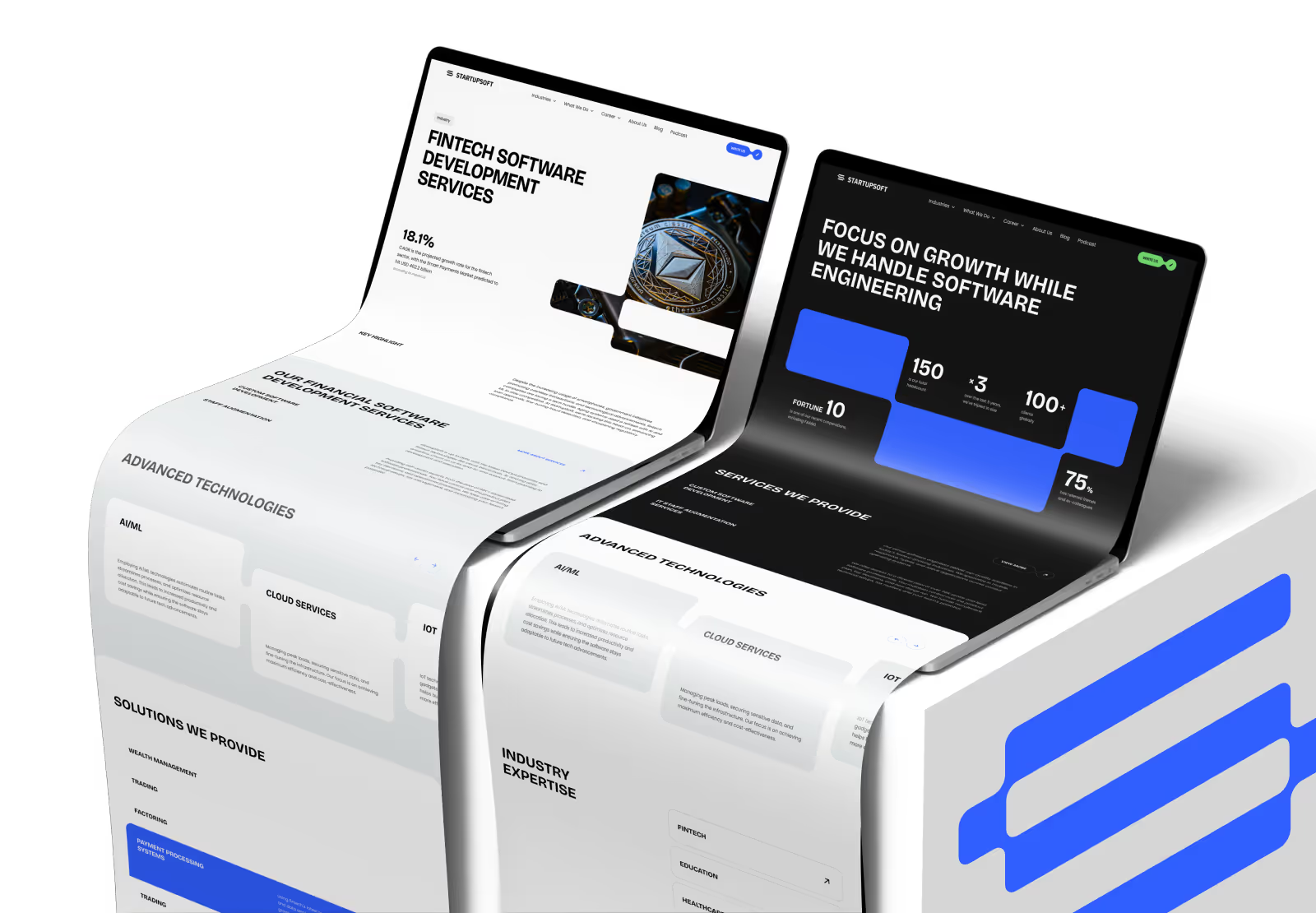

Looking to create a stronger digital presence? Let’s chat!
What our clients say about working with us



.svg)
.avif)


.svg)

.svg)