Starting point
A humanitarian system that read as a food producer
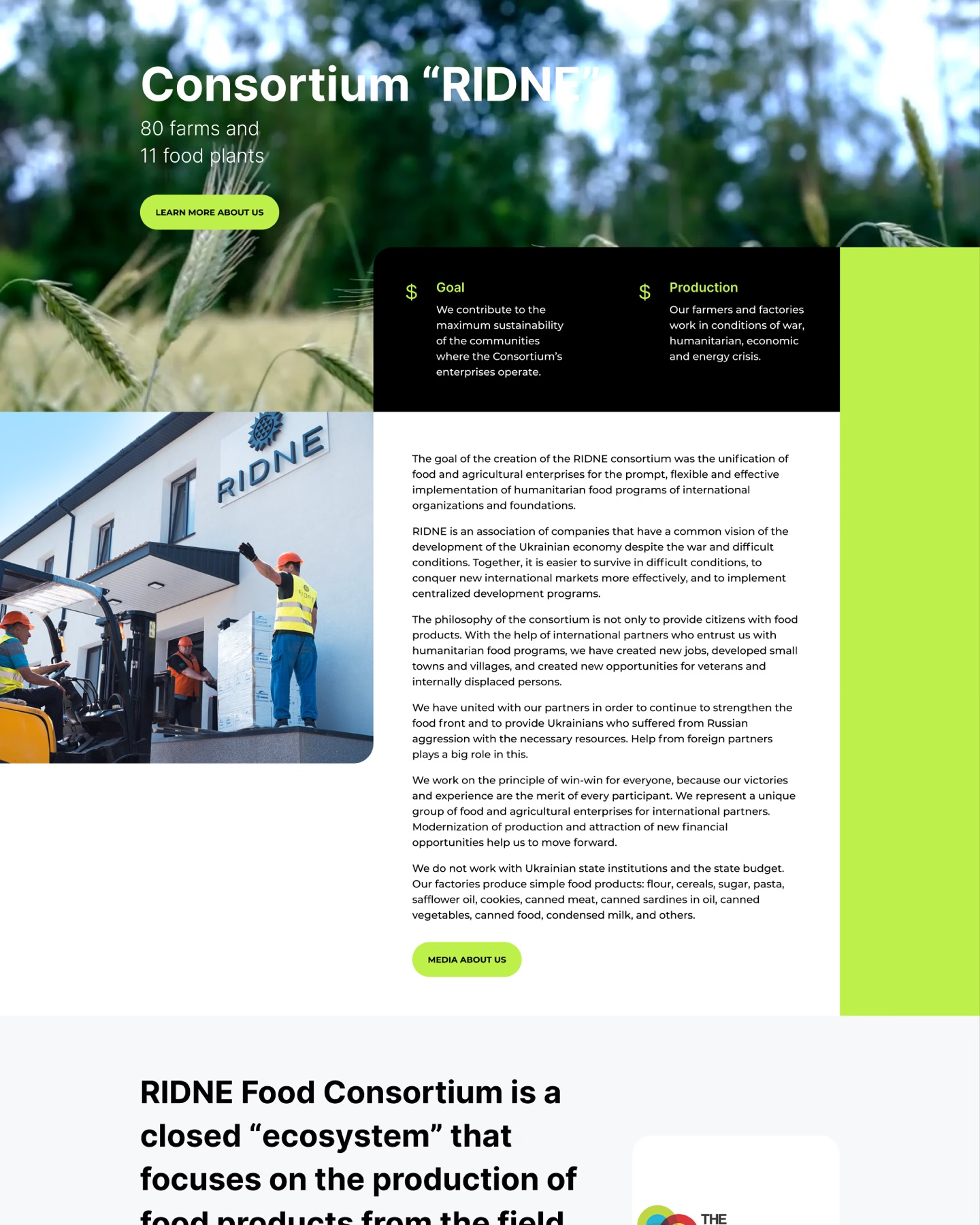
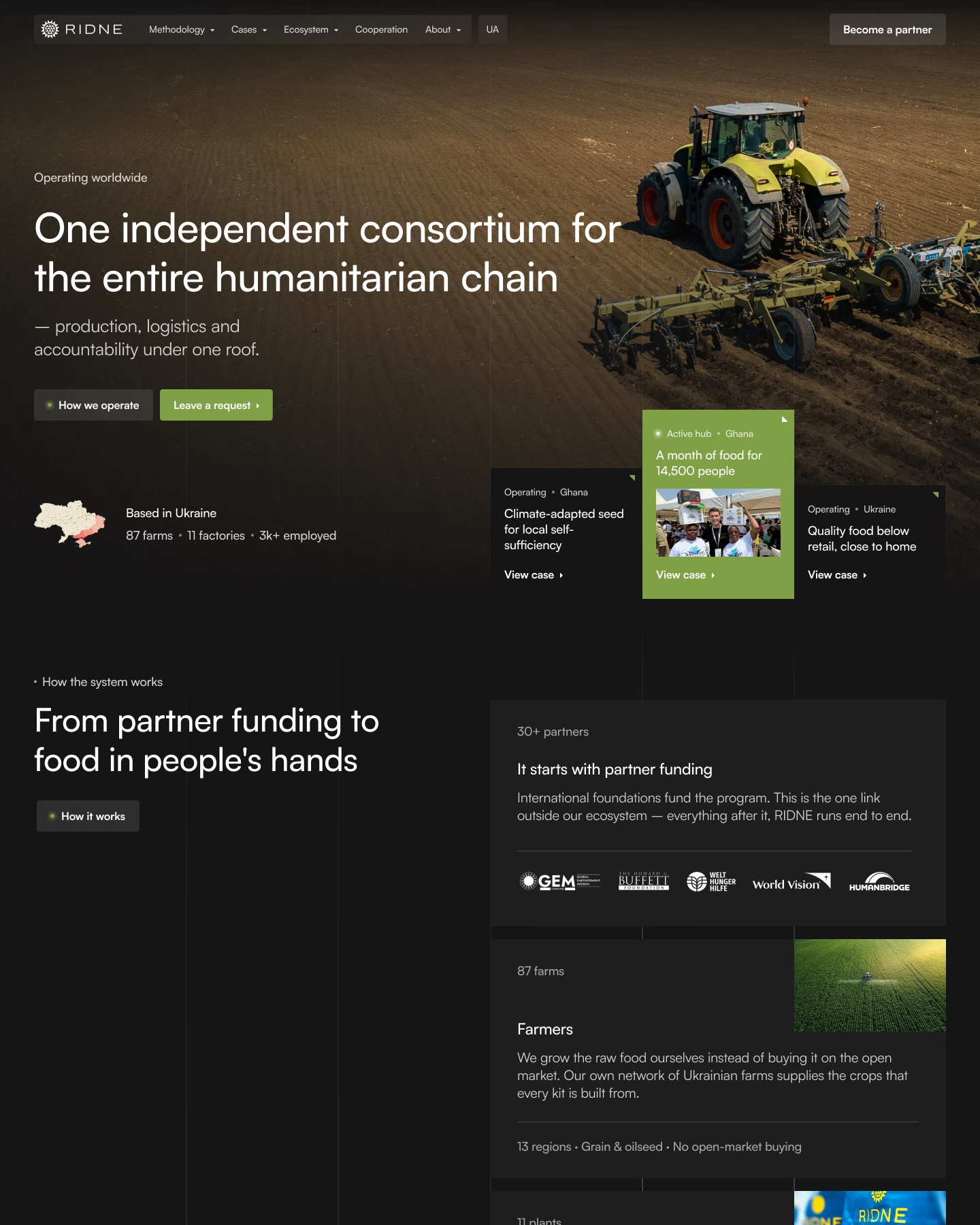
Foundations fund the programme, and Ridne runs everything after it: farms, plants, packing and delivery. The old website showed a consortium of producers with a product grid, so the main reason to choose Ridne, one accountable chain, stayed invisible.
Discovery
Built for the person who has to convince their leadership
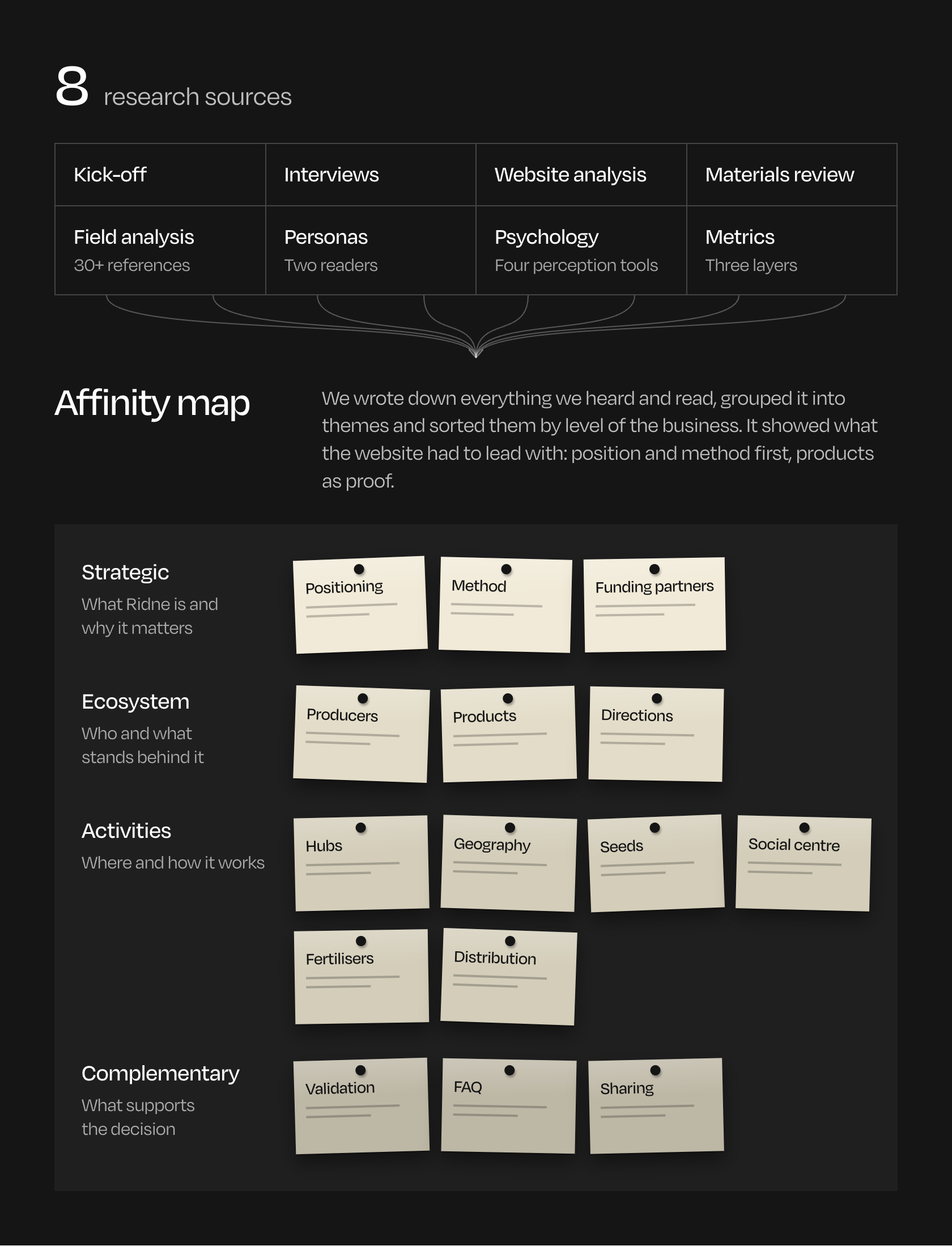
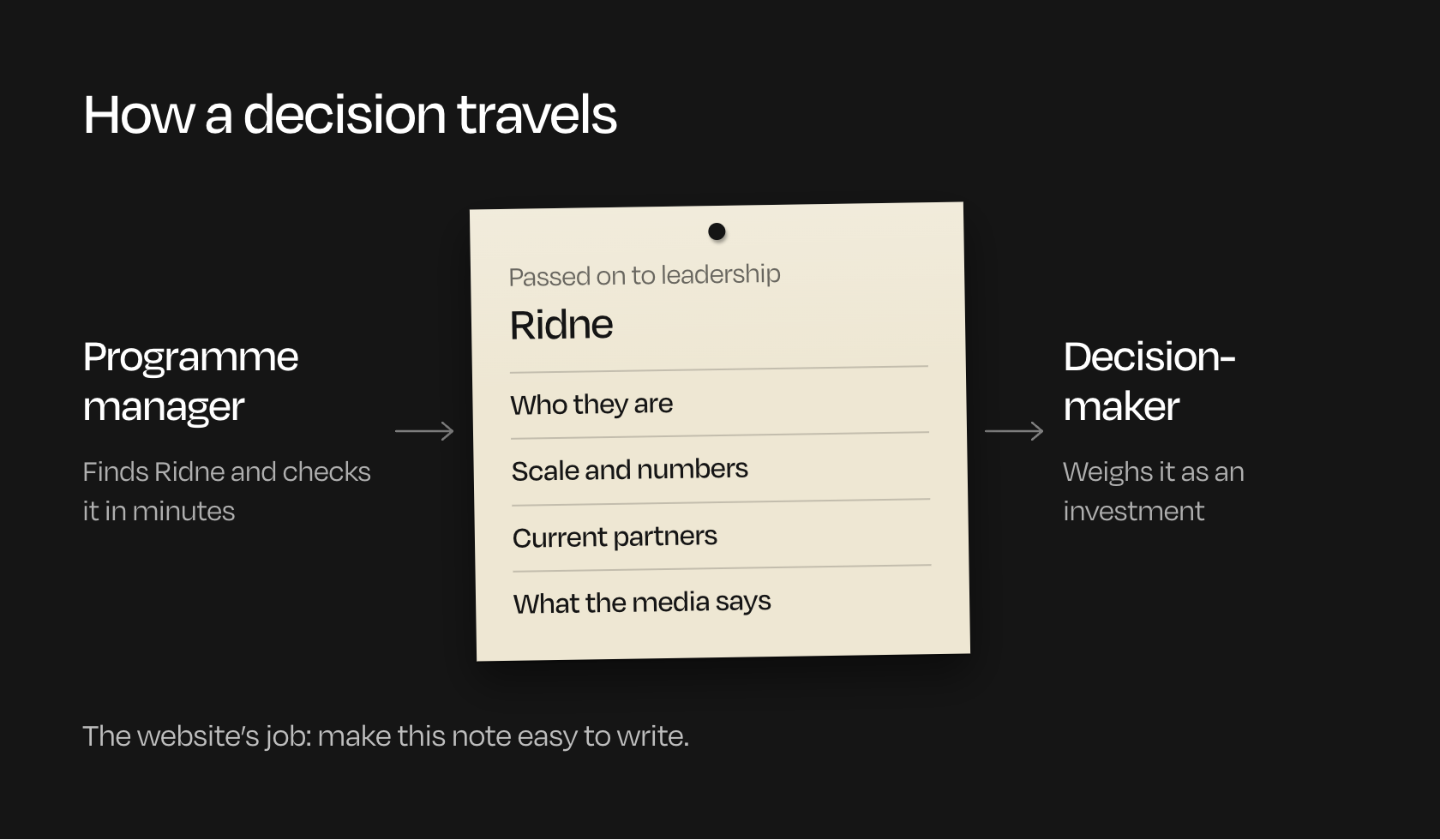
Interviews, 30+ reference websites and an affinity map of everything we learned led to one finding: the person who finds Ridne is rarely the one who decides. A programme manager checks it in minutes and passes it on, so the website has to work as material for that conversation.
The programme manager needs legitimacy in 30 seconds, then numbers, partners and a named contact. The decision-maker weighs Ridne as an investment.
Neither charity nor supplier. Ridne is defined by contrast: no state funding, no tenders, not mass-market.
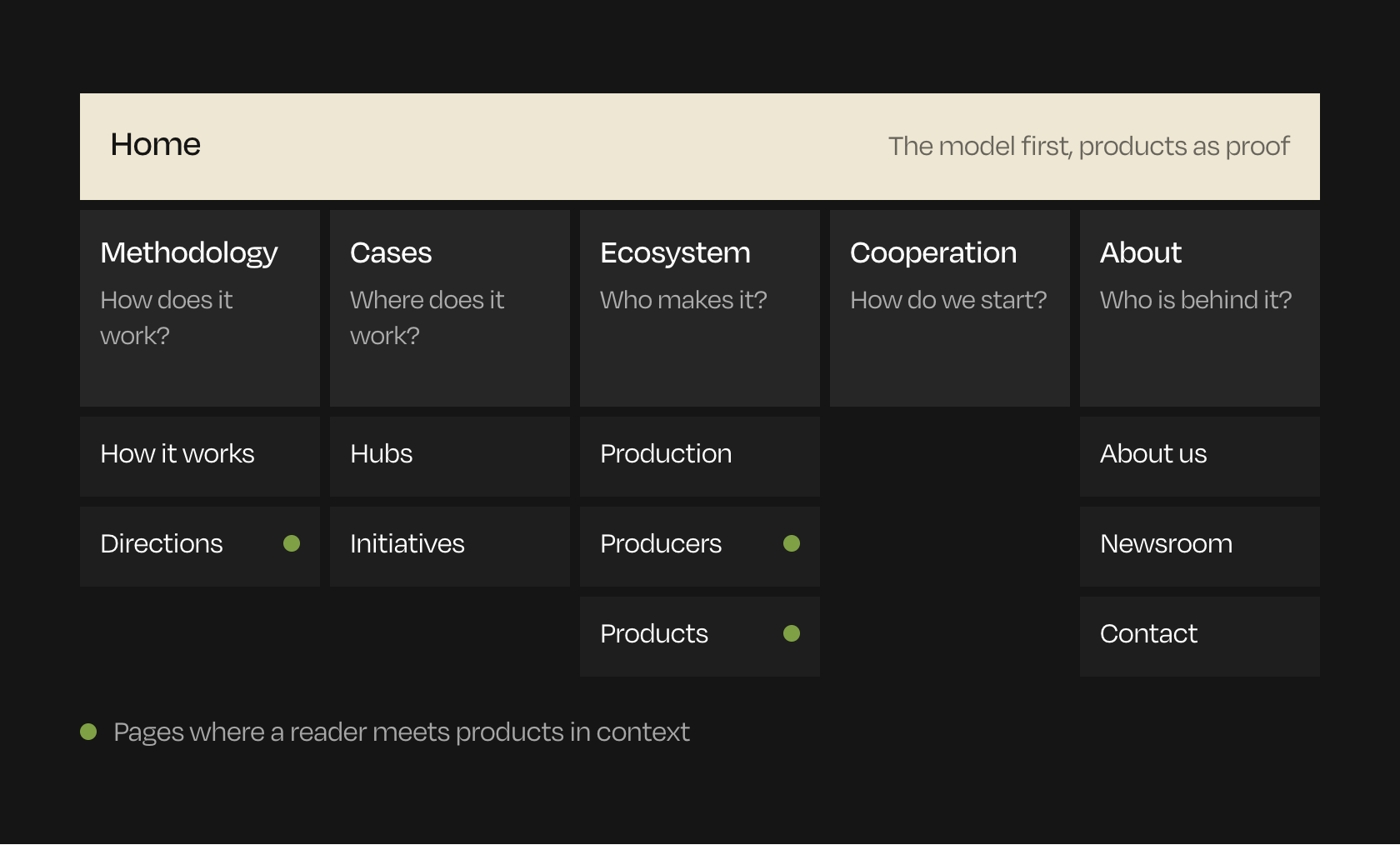
Navigation follows the logic of the work, so a partner learns how Ridne works before what it makes.
Hundreds of people, not thousands, and most come to verify what they already know. So we measure engagement and contact intent, not form fills.
The model
The model a partner can retell after one scroll
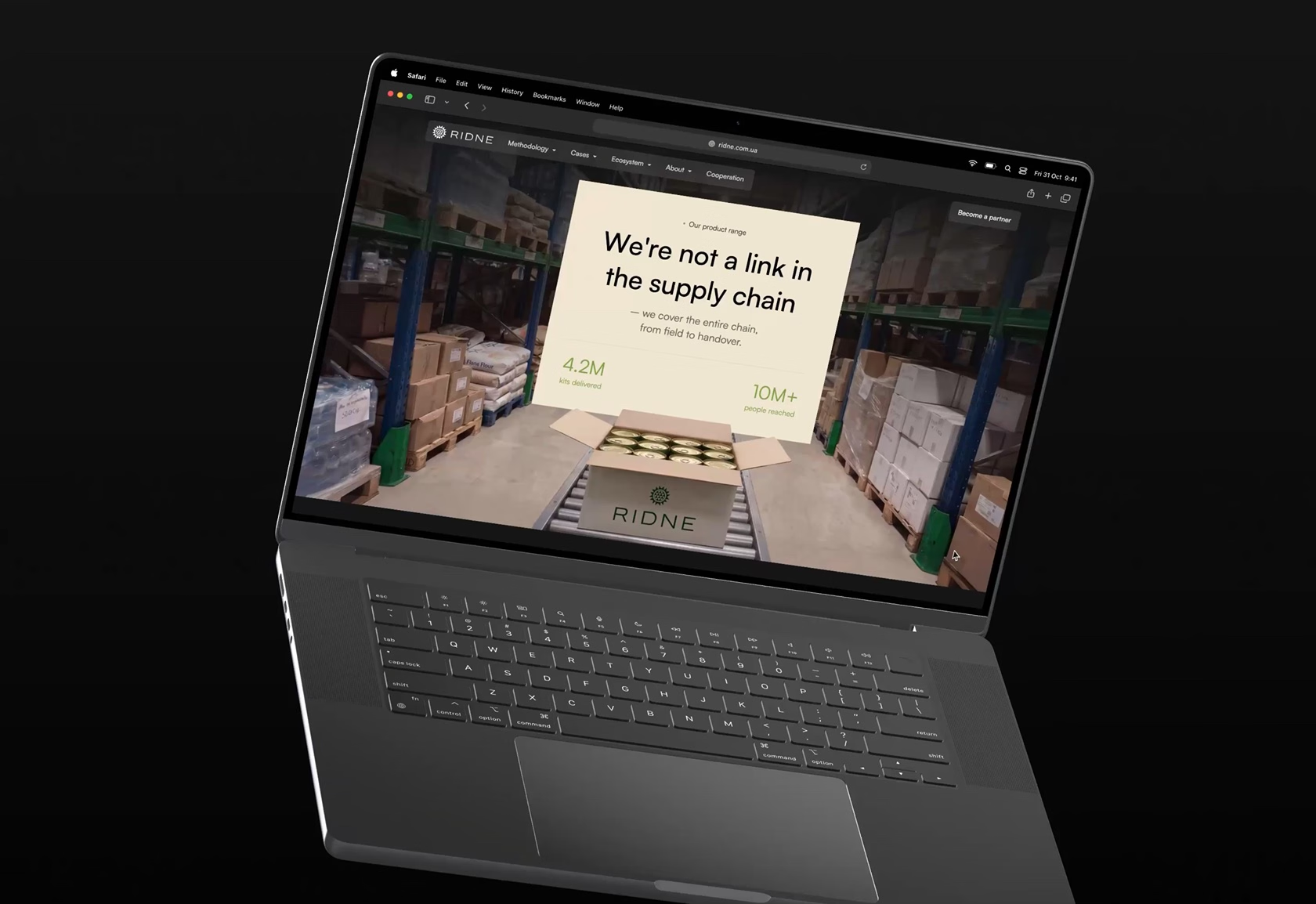
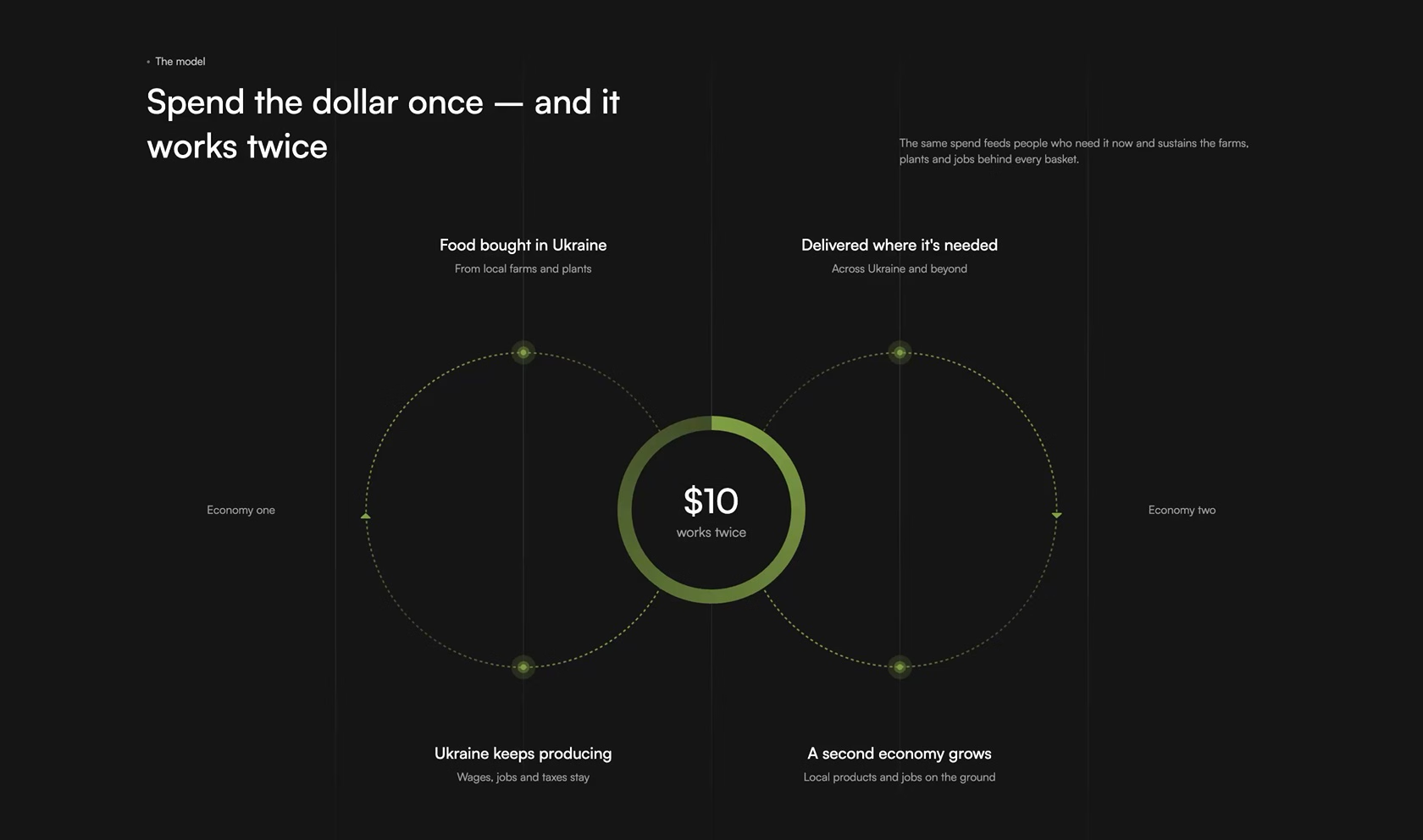
Ridne’s strongest argument was its model, but it lived in conversations. We turned it into a sequence a partner can follow and repeat: who funds, who produces, who delivers, and why the money works twice.
Six steps from funding to distribution. Funding is the only link outside Ridne, and one accountable chain is what a funder is really paying for.
The economic argument in one diagram: the same budget feeds people now and keeps Ukrainian farms, plants and jobs running.
Due diligence gets its own page: each link in the chain opens to show what Ridne controls at that step.
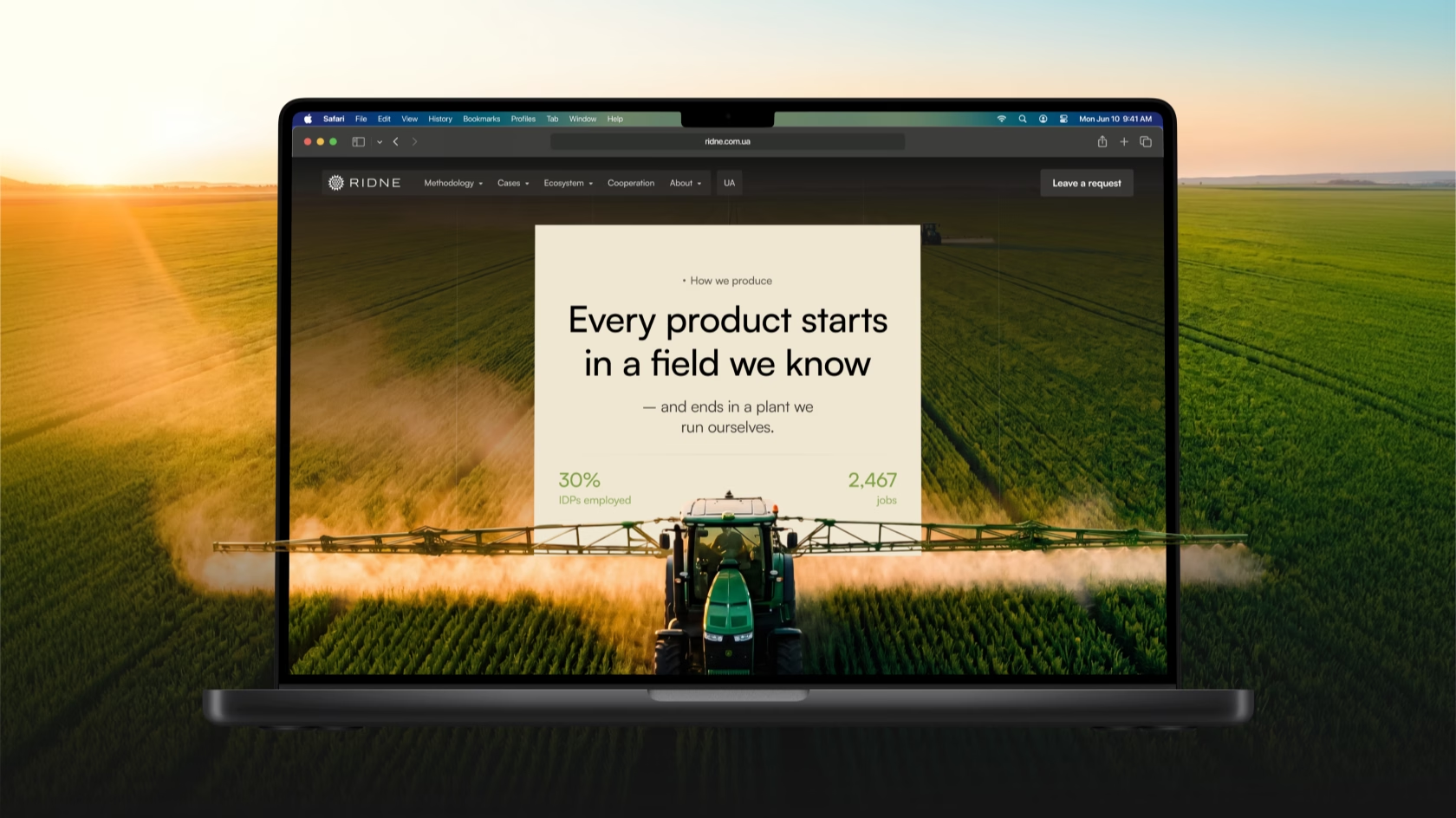
Products
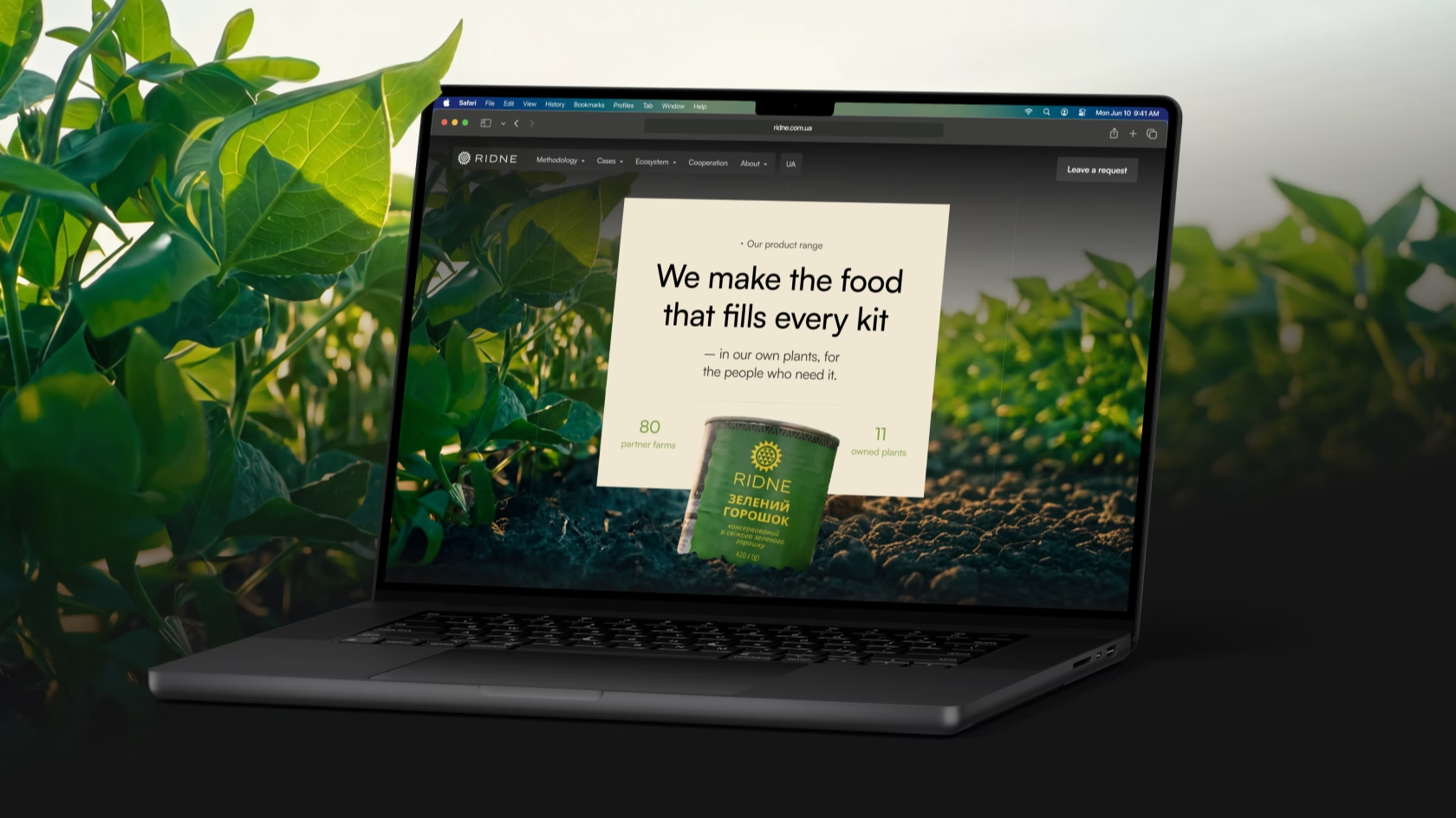
Products shown in context, not as a catalogue
The range proves that Ridne really produces, but the food is made for programmes only. A shop-like catalogue would bring retail requests and blur the category, so each product appears where it explains something.
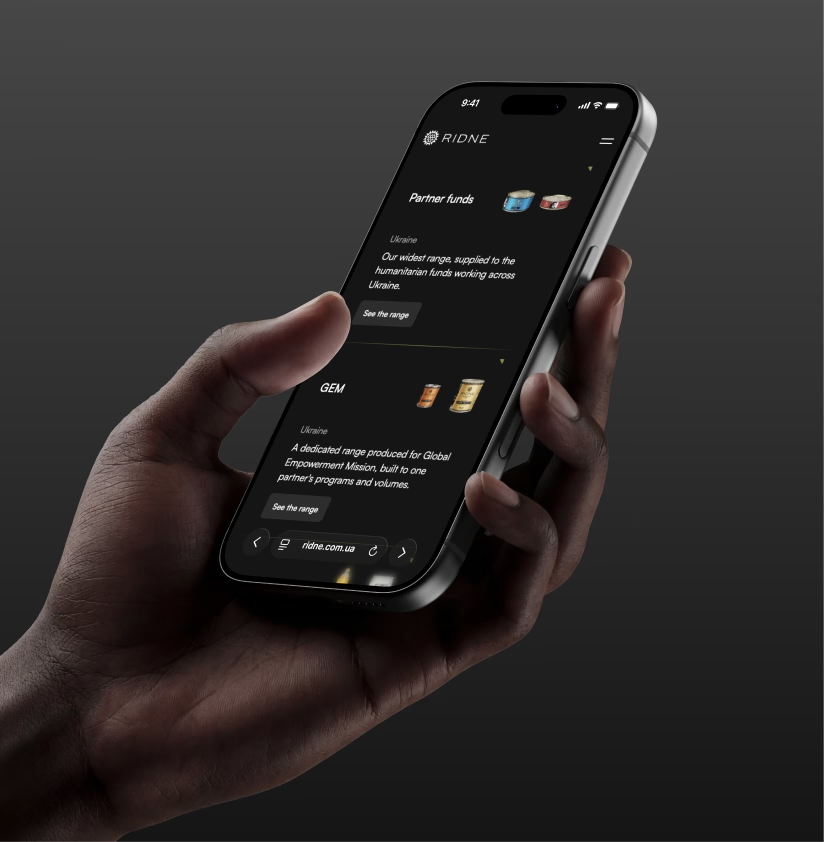
Each direction lists the products it delivers, so a reader sees what it means in practice.
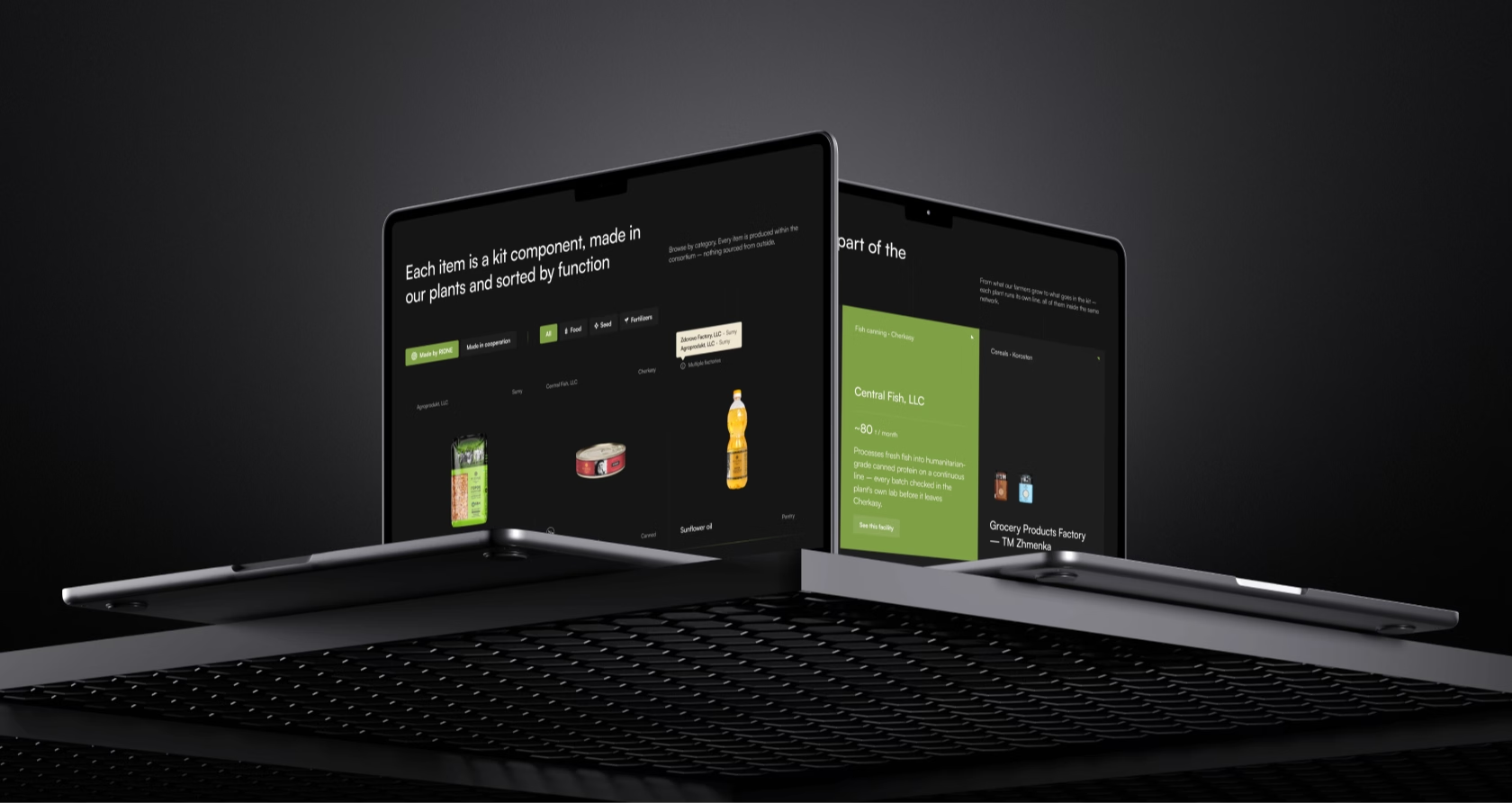
Each producer shows what it puts into a kit, so a reader sees a real plant behind the food.
The full range, filtered by direction and marked as made by Ridne or in cooperation. No prices, carts or order buttons: every call to action leads to partnership.
Proof
Trust built from things a partner can verify
A programme manager checks before calling, so each question they ask has its answer on the website, where it can be verified.
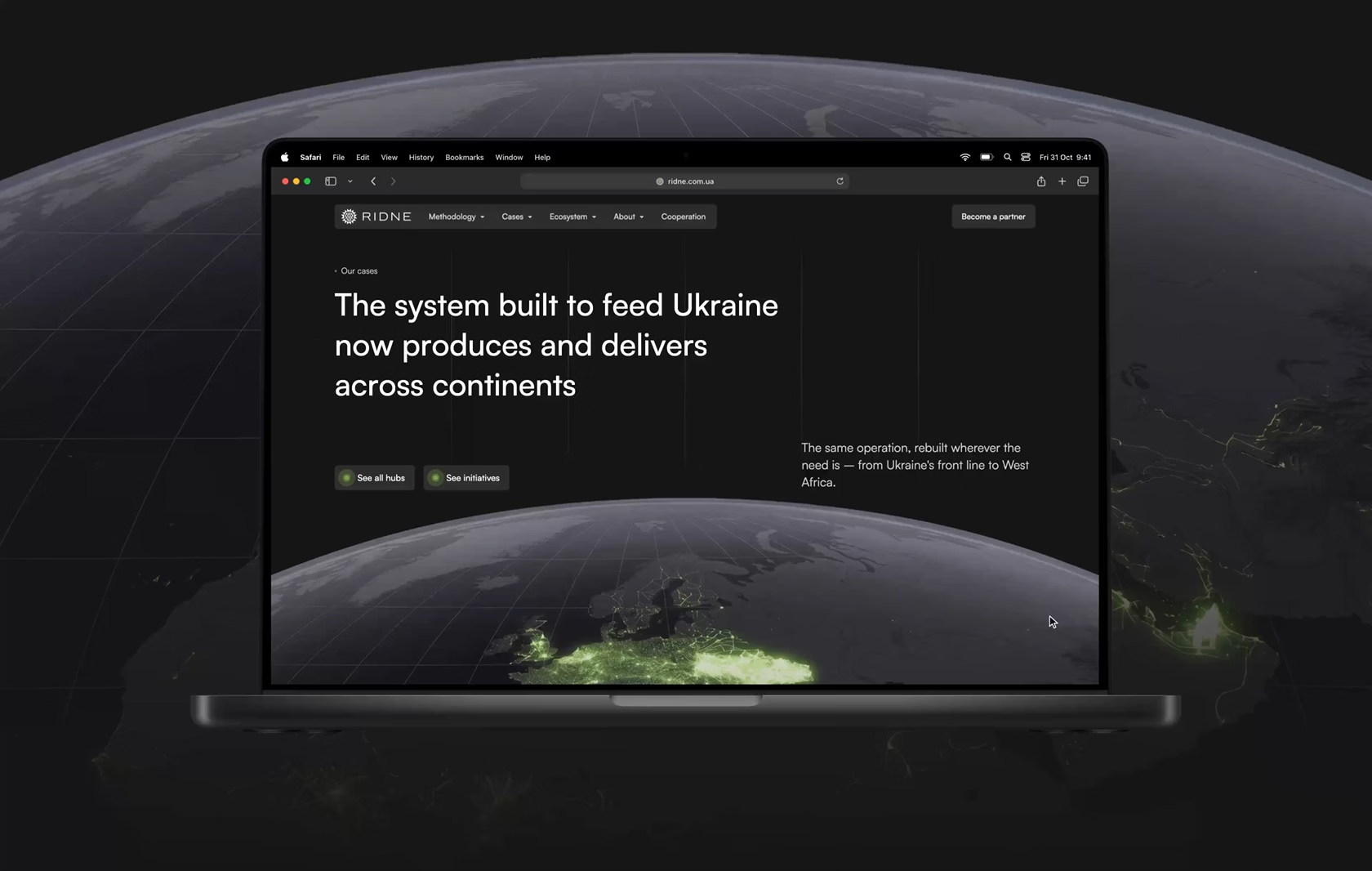
The maps show only real operations, and every location carries an honest status – active, forming or memorandum – instead of looking finished.
Operational leadership and an international advisory board, by name, with their roles and experience.
The homepage opens with current cases, and the newsroom brings Ridne’s own news together with outside media coverage.
Ridne is four years old, which a funder could read as a risk. The About page tells that history as an advantage: how much was built in that time.
Visual language
A website that feels like a system at work
Agribusiness and charity each have a familiar look, and Ridne is neither.
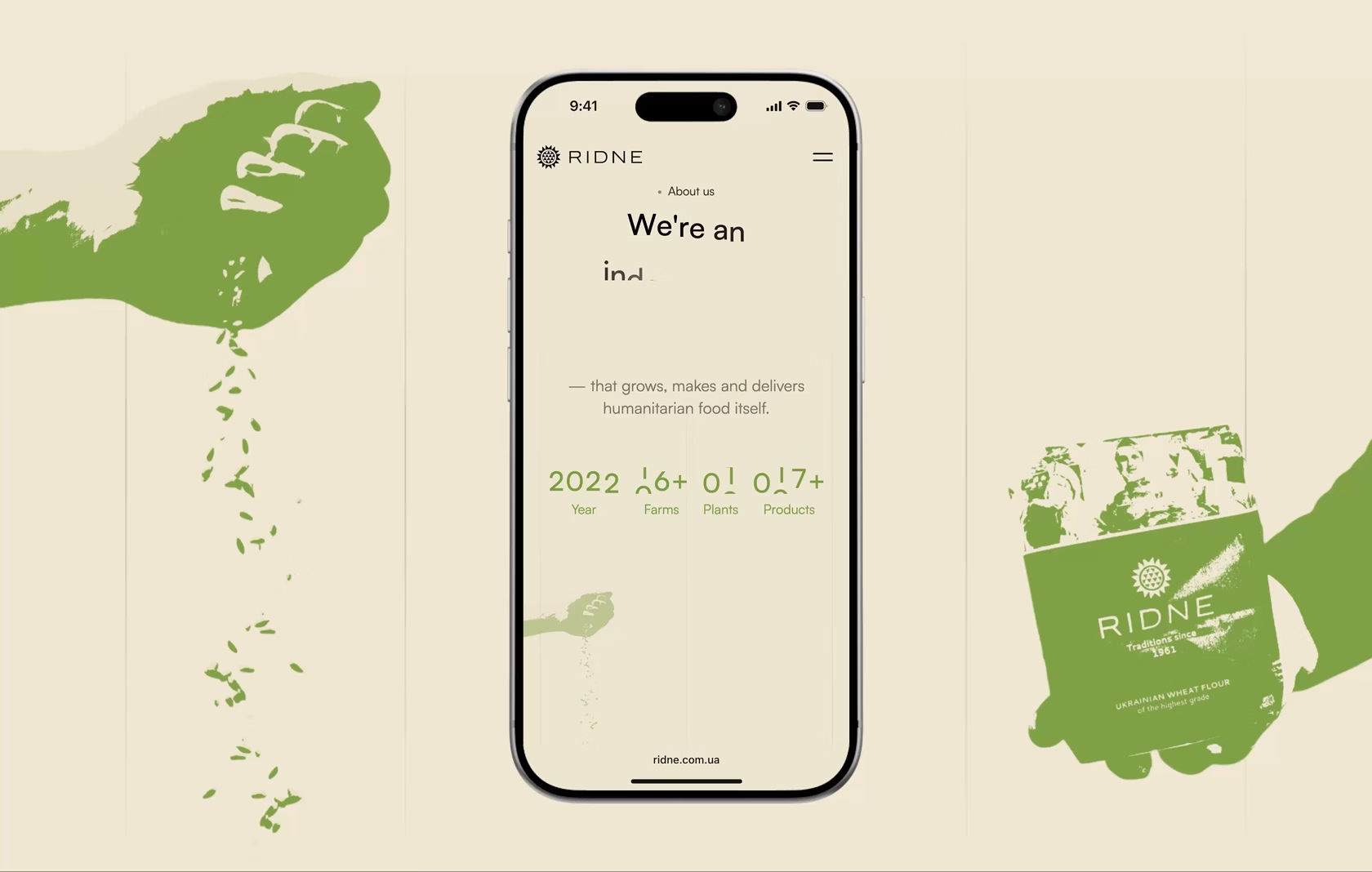
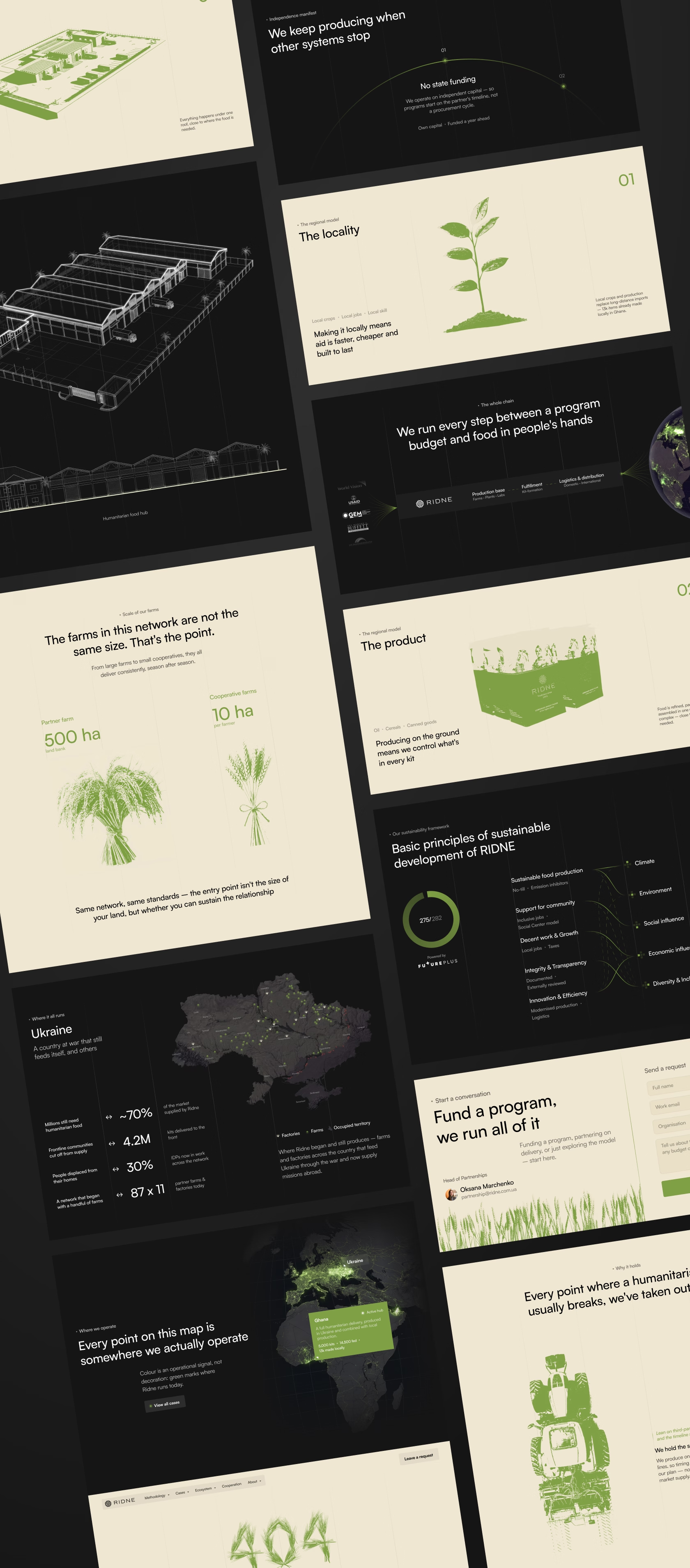
Dark means data to check, light means context to remember. The alternation tells the reader how to read, and it keeps long pages from feeling uniform.
An illustration style developed for Ridne: recognisable across the website and built on association rather than literal scenes. It replaces stock photos and staged aid imagery.
Scroll stories move the chain, the dollar and the numbers, and even the preloader keeps turning, so the system reads as always at work.
Results
From a producer’s catalogue to a system partners can follow
Research turned into one clear category and message: not a producer or a charity, but one system for the entire humanitarian chain.
New structure and copy that lay out the model, the proof and the people, for a manager who checks first and a leader who decides.
An illustration style, dark and light sections and motion that give Ridne the presence of an international organisation.
35 pages designed and built in eight weeks, in a CMS the team runs itself, with a month of support after handover.
Tell us how your organisation works. We’ll start with discovery and turn the model into a website that partners understand in minutes.